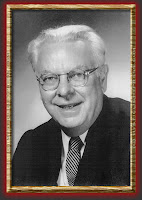
by Harvey Strum, Russell Sage College
Copyright © 2022 All rights reserved by the author.
“Our only desire being that this little contribution which we are able to make shall be so
disposed of as to alleviate, to a great extent as it can, the sufferings of our brethren, the
afflicted people of Ireland,” expressed the hope of the Irish Relief Committee of Utica. In
1846-47 the people of New York from Erie County to Suffolk County and from Malone to
the Bowery rallied to the cause of Ireland. Residents of central New York joined in this
statewide and national movement of voluntary philanthropy as the United States emerged
as the leader in voluntary international philanthropy. More aid came from New York state
than any other state, and more ships sailed from the port of New York City carrying food
and clothing than any other city in the United States. American aid became a voluntary
people to people movement because President James K. Polk considered foreign aid
unconstitutional and would not support a bipartisan proposal in the Senate to appropriate
$500,000 to aid the suffering, Irish. This meant the American people had to take
responsibility for helping the Irish without leadership from Washington. As a newspaper
in Norwich, Chenango County argued: “not only in this town, but every other town in the
county, we hope to see obey the call of humanity” because “hundreds are dying daily of
starvation in Ireland.” The people of central New York lived up to this responsibility and
gave their pennies, quarters, and dollars for the Irish.[1]
Novelist James Fenimore Cooper, chairman of the Cooperstown and Otsego County
Irish Relief Committee, observed the widespread support of Irish relief: “Widows gave
their sixpences and shillings, and I never knew a better spirit in the ascendant.” Otsego
County provided a model of Irish relief efforts in central New York and in the United States during the Great Hunger. Local newspapers published harrowing accounts of the famine in Ireland. According to the Freeman’s Journal, of Cooperstown: “The accounts from Ireland, of the famishing condition of her people, are most appalling.” Readers learned of the dire conditions in Ireland and Scotland. To stimulate action, the press reported on famine relief meetings in other parts of the country and of meetings in Washington and Albany encouraging citizens to organize their own relief committees. [2]
James Fenimore Cooper and one hundred and thirty-two other citizens of Cooperstown issued an appeal, “Relief to Ireland,” directed “To the Inhabitants of the County of Otsego” notifying them that a preliminary meeting for Irish relief met on 20 February and decided to request the citizens of Otsego County gather at a county meeting on 4 March to aid the Irish. Their appeal emphasized the magnitude of the crisis in Ireland, and the obligation of the American people to help. To push the people of Otsego County to act, Cooper and the others remined citizens of the “great and laudable exertions are making, in all parts of this vast country” to help the starving Irish. Newspapers and public meetings frequently used a combination of competition and shaming to motivate local residents to act. The appeal stressed the bounty of America compared to the want in Europe, a theme repeated across the country in 1847, but Cooper and the others raised an issue rarely mentioned in other city, town, and county meetings that the blessings of philanthropy were worth more than the pride of military victories---a not subtle reference to the Mexican American War. [3]
When the residents of Cooperstown met on 4 March, James Fenimore Cooper assumed the chairmanship of the resolutions committee and gave the major speech about conditions in Ireland. Robert Campbell chaired the meeting, and Charles McLean served as secretary. George Starkweather followed Cooper and addressed the assembled crowd. Resolutions adopted at the meeting stressed the common themes raised around the country. The resolutions voiced concerns about the magnitude of the crisis, the sympathy of the people of Otsego County to the human suffering in Europe, American abundance, and the need to unite to help the people of Ireland. Cooperstown’s residents elected James Fenimore Cooper chairman, George Starkweather secretary, and Henry Scott as treasurer of the Cooperstown and Otsego County Central Committee for Irish Relief. Resolutions recommended the establishment of local committees in each town in the county to collect foodstuffs, clothing, and money. Members of the Central Committee suggested dividing the towns by school districts and sending young men in sleighs or other vehicles to each house to collect donations. The Central Committee recommended food donations of corn, peas, beans, grain, and smoked and salted meat. A separate county appeal stressed American abundance, the scale of the suffering, and appealed to the pride and charity of the residents of Otsego County. Because “hundreds perish every week” and “food is wanting and that we possess in abundance” the American people must help the Irish.[4]
Newspaper editors endorsed famine relief, as they did throughout the United States. According to the editor of Freeman’s Journal: “The Irish Relief Depot, directly opposite our window, is filling rapidly with generous contributions of the humane.” The editor singled out the town of Hartwick “has been foremost in her action, and met a good example, which it is hoped…will be followed by her sister towns.” Editors used a mixture of pointing out good examples of charity, emphasizing competition in good works, and shaming to encourage donations. Similarly, the editor of the Otsego Democrat, reported on the Central Committee sending 125 barrels of grain “for the benefit of the starving Irish. Let the cry be ‘still they come’” Cooperstown’s newspapers published reports of the donations, as for example, “the towns of Maryland and Butternuts, and some other towns, have considerable grain in store, which will be forwarded as soon as canal [Erie Canal] navigation opens.” James Fenimore Cooper collected donations through the middle of July 1847, and like other county chairmen, forwarded the collections to the Irish relief committee in New York City for transportation to the Society of Friends in Dublin for distribution. [5]
Nearby Madison County followed the same pattern. As early as November 1846 residents could read of the “almost want of supply in Ireland, and the increasing destitution in that country, and in some parts of Scotland.” Conditions had not improved by February 1847: :There appears to be no mitigation in the accounts of sufferings by the famine in Ireland.” A circular appeared in mid-February calling upon “the citizens of Madison County to assemble in their respective towns, on Wednesday next, the 24th inst.,----for the purpose of contributing to the wants of the starving people of Ireland.” A local editor encouraged participation: “We hope the call will not be unheeded.” The press played a vital role in stimulating participation in the famine relief drive. A local paper, Madison County Whig publicized the meeting “for the purpose of raising funds for the starving millions of Ireland”[6]
Citizens of the county met on the 24th at the Presbyterian Church in Cazenovia. Banker Jacob Ten Eyck presided at the meeting and resolutions adopted stressed he privations in Ireland, sympathy of the American people, and Americans, “abounding in the surplus of breadstuffs, and all productions of the earth” had a moral obligation to aid the Irish. Unlike the later Know Nothing movement that identified the Irish as the demonic Catholics, in 1847 the people of Madison County portrayed the Irish as “fellow-men” suffering from the destruction of their crops. In 1847, the Irish were fellow Christians. To assist in aiding the Irish the Central Committee established at the meeting created district subcommittees in the village of Cazenovia and urged the creation of town committees in the county to solicit donations. Unlike the Otsego County committee, but in common with most village, town, and county committees in the United States, the Cazenovia and Madison County Committee called upon the clergy to actively solicit contributions in each church. [7]
Contributions came in from throughout the county. In the village of Cazenovia, Jacob Ten Eyck donated $25, the lodge of Independent Order of Odd Fellows,$75, and ‘KJ’s, “an order of young men, $27. Members of the Methodist, Presbyterian. Baptist, and Free Will Baptists collected in church for the Irish. Women donated as well as men, like Mrs. D.M. Pulford who gave $3, Anna Rice donated $1, and Mrs. C. Stone fifty cents. Altogether Cazenovia raised $366, Stockbridge $133, Smithfield $127, Madison $96, and De Ruyter about $76. By far, the largest contribution in the county and in upstate New York came from abolitionist Gerrit Smith of Peterboro, who sent $2,000 to the New York City committee “given to the starving people of Europe.”. People throughout the county, whether Lucretia Fuller with twenty-five cents to Smith’s $2,000 joined in this state and national movement of voluntary philanthropy.[8]
“We ought not to be behind our neighbors in this work of charity,” asked the editor of the Chenango Telegraph. Millions of people faced starvation in Ireland and “is Norwich to do anything in the good work?” Meetings took place throughout Chenango County. At a spirited meeting at New Berlin for Irish relief several speakers discussed the crisis, the audience donated $118, and the town meeting established a central committee to collect donation dividing up the town into school districts to facilitate fundraising. Similarly, led by the Society of Friends in Smyrna, residents sent $60 to New York City for the Irish. The inhabitants of Shelburne sent thirty-nine bags of cornmeal to New York. Town and village meetings provided an opportunity as the most basic level for the people of central New York to express their support for the cause of Irish relief. [9]
Village and town meeting played an instrumental role in initiating famine relief efforts in Tompkins County. Residents of Trumansburg met at the Presbyterian Church on 25 February and formed “a town society for the relief of the poor in Ireland and Scotland.” The audience voted to create an executive committee representing Trumansburg and the neighboring Jacksonville and Waterburgh and established depots for the collection of foodstuffs and clothing. A couple of weeks later Rev. Wilson Walker encouraged members of his Episcopalian congregation at St. Johns Church in Ithaca to donate $62 for Ireland. A local newspaper praised the congregation for its liberality, considering being “few in number, compared with some other denominations among us.” The editor of the Ithaca Journal wanted to start a competition between denominations to aid the Irish. [10]
Efforts by the editor and Rev, Walker pressured the trustees of Ithaca to call a village meeting for Ireland on Tuesday evening, March 16th. As the newspaper suggested: “A general attendance of our citizens is earnestly requested.” Nathan Williams, President of the Board of Trustees, chaired the meeting. After a few remarks by President Williams about the grave conditions in Ireland followed by three other speakers discussing the problems in Ireland and the need for Americans to help. At a second meeting on 30th March attendees established a general committee to collect donations in foodstuffs and money. Village residents divided up the village into three districts to facilitate fundraising and called on towns in Tompkins County who have not previously contributed to hold meetings and send aid to Ithaca for collection. Workers at the Ithaca Falls Woolen Factory sent in their donations for Ireland including $5 from Augustus Atwood, $1 from Thomas Bray, $1 from Eliza Stoddard, and $1 from Margaret Maloney. These donations confirmed that aid for Ireland was a people-to-people movement in 1847 including from the poor operatives, men, and women, at a woolen mill in Ithaca, New York. [11]
Women donated to Irish relief, from Brooklyn to Potsdam, but they could also initiate famine relief as they did in Binghamton, Broome County. In early February 1847, a group of women, led by Mrs. Dr. Andrews, Mrs. D.S. Dickinson, and Mrs. John Clapp, called on the ladies and gentlemen to attend a relief party at the house of Edward White Binghamton’s women established a Ladies’ Irish Relief Committee. The press endorsed this event as a “noble and praiseworthy project, and we hope to see the citizens of Binghamton” give liberally to the cause. Although a severe hailstorm hit that evening the women’s appeal “was responded to with much zeal and real charity by the inhabitants of our village.” Members of the Odd Fellows gave $100. Women raised $427 to purchase cornmeal sent to Dunmunnay and Skibbereen, Ireland. In addition, “ladies whose hearts have been touched with sympathy for their perishing fellow beings in Ireland,” were invited to bring clothes and bedding to the home of Gilbert Tompkins for the Irish. [12]
Spurred on by the actions of Binghamton’s women the citizens of Binghamton met twice in March for Ireland. According to one of the newspapers the first meeting was “to add our mite to the large contributions now being gathered in many of the cities and towns in our country.” Speakers concentrated on the conditions in Ireland and the sympathy of the American people. At the first meeting, few of the wealthy and those with social standing attended and the bulk of the audience showed the “weather beaten faces of the mechanics and Irish laborers.” The meeting raised $200 including $80 from the Irish laborers on the local railroad. An appeal was also made to the towns in Broome County to participate. John Clapp, the treasurer of the Binghamton Irish Relief Committee sent $814 from Binghamton to Mahlon Day of the New York City committee who thanked “thee and all the contributors, in the name of suffering humanity for your benevolent aid.”[13]
H. Montgomery, editor of the Daily Advertiser, in Auburn, Cayuga County, agreed on the need to help suffering humanity, but added the competitive edge, “Auburn and Syracuse, with the people of the counties in which they are located would not suffer themselves to be outdone in philanthropy.” Montgomery became one of the organizers of Irish relief in Auburn, evidence of the advocacy role played by newspaper editors during the first half of the 19th Century. Montgomery signed the broadside for a public meeting “to take into consideration the propriety of sending contributions for the relief of the poor [14]in Ireland, suffering the evils of famine.’ The most prominent signer of the appeal was William Henry Seward, former Whig governor of New York, and future Secretary of State under Abraham Lincoln. [15]
Villagers met on 15 February 1847, and the village President, E. A. Warden asked William Henry Seward to chair the meeting. Auburn’s meeting did something unique passing a resolution asking the state legislature to appropriate $100,000 for Irish relief. After adopting several resolutions, a subcommittee drafted an address that appealed for donations due to the calamitous situation facing the Irish people. This appeal identified the Irish not as the “other” but as members of “our race” suffering starvation. As with other meetings in central New York and the United States, the address reminded the villagers that they lived in a land of abundance and had a responsibility to help the Irish. Villagers expressed their support for a Congressional appropriation for the Irish and pledged to work with the state Irish relief committee in Albany The Auburn meeting prompted Cayuga towns to organize their own relief committees. For example, Springport’s inhabitants met on 18 February at the Presbyterian Church for collecting contributions “to relieve the extreme desolation and starving conditions of the poor of Ireland.” Residents established an executive committee to collect funds and foodstuffs for the Irish. Other towns in the county followed sending donations to either the state committee or the New York City committee. [16]
Similar appeals emerged in towns in Onondaga County. In Baldwinsville, the local newspaper reminded its readers that “meetings are being held in all parts of the country and means devised for the mitigation of the distress of the poor peasantry in Ireland and Scotland.” The editor of the Onondaga Gazette recommended that the people of the town of Baldwinsville needed to help: “The people of this county---of this very town, are able in some degree to alleviate this distress by making collections…from their abundance.” Once again, and editor encouraged, advocated, and shamed his readers to help the suffering, Irish. The Baldwinsville editor portrayed the Irish as fellow human beings needing our assistance, not the “other,” a recurrent theme throughout central New York. In 1847, most Americans identified with the Irish as fellow Christians. As in Binghamton and Brooklyn, the editor wanted women to take the lead: “We hope our ladies will take this matter in hand and busy themselves in collecting subscriptions for the famishing.” Women could accomplish more in a week “than any man or set of men in a month.” This was an unusual perspective about the role of women in 1847, although women in towns and cities in New York, Pennsylvania, and Illinois played an important role in famine relief in 1847.[17]
Continuing the pressure to act the editor noted: “Another week has passed, and the citizens of Lysander have done nothing---nothing---for the relief of suffering humanity in the old country.” The editor did not believe that his readers “are so given to hardness of heart to turn a deaf ear to the cries of misery and distress” from Europe. Citizens throughout New York held meetings and established committees to raise relief aid. The editor asked: “Then why should we be backward.?” Closer to home he cited the meetings in Salina and Syracuse in Onondaga County. A relief meeting held recently in Syracuse collected $600 and within two weeks rose to $1,000. At the meeting in Salina, a county relief committee was formed with James Lynch, chairing the county executive committee, consisting of representative from Salina and Syracuse. Drafting an appeal to the towns in Onondaga County the committee stressed the magnitude of the crisis, the abundance of the American people, common Christianity, and the need for each town in the county to hold Irish relief meetings. The meeting made clear that “our fellow citizens without distinction of sect or party” joined to alleviate the suffering in Ireland. [18]
Towns responded. Spafford held a meeting for Irish relief on 10th March creating a committee of ten to procure contributions and a local executive committee to receive and forward the donations. In mid-April, residents of Baldwinsville met at the Seneca Hotel to organize relief efforts. The editor argued if you cannot afford to give $20 give $5, and if you cannot afford $5 give $1 or fifty cents, “at least give something---and show you are not entirely destitute of charitable feeling.” Van Buren and Lysander also held meetings in mid-April for Irish relief. Manlius sent twenty-seven barrels of cornmeal aboard James in June to Limerick. The women of the Presbyterian Church and Society of Onondaga Hollow held a fair and collected $63.68 “to the relief of the starving Irish and Scotch.” Cardiff sent $95, Skaneateles $50, Liverpool $51, and Fulton $40. Meanwhile, James Lynch, of the Irish Relief Committee of Salina and Syracuse sent $1,200 as a “first remittance” to Myndert Van Schaick, chairman of the New York City General Irish Relief Committee. Members of the Salina and Syracuse committee preferred that half of their donations be used to send cornmeal to the Irish counties of Cork, Kerry, and Tipperary where they believed “the greatest destitution prevails.” Van Schaick informed the Dublin Quakers of the wishes of the people of Salina and Syracuse. Eventually, Syracuse and Onondaga County donated about $3,000. Separately, Catholic churches in Salina and Syracuse sent $31 and $250, respectively, to Archbishop John Hughes in New York City for the Irish relief committee. Catholic priests split on how they forwarded money donated in church for the Irish, as some sent the funds to their local Irish relief committees, others to the New York City committee, and other preferred to go through Archbishop Hughes. [19]
Meanwhile, a committee of women was appointed in Rome, Oneida County to solicit donations. According to the Roman Citizen’s editor, J.P Fitch, “through them the good people of this place my assist in relieving the terrible distress of the Irish.” The women in Rome “were busy taking subscriptions for the relief of the famishing in Europe.’ Fitch expressed his hope no one in Rome would refuse the women’s request for donations. Responding the appeal that came from the state Irish relief committee in Albany, the citizens of Rome met in mid-February with the village president, Dr. H.H. Pope chairing the meeting. Not surprisingly, editor J.P. Fitch won election as a member of Rome’s Executive Committee, again suggesting how newspaper editors not only publicized local relief efforts but became active participants. Subcommittees were established to divide the town, including Wright’s Settlement, On the Turnpike, and Across the Swamp, to facilitate reaching everyone in the community for donations. To further aid in fundraising, several vocalists from Utica came to town to hold a musical concert for Irish relief. In response to an appeal from the Oneida County Relief Committee in Utica, Rome became one of the two depots in he county for contributions of flour, wheat, cornmeal, and other provisions. By early March, Rome’s committee sent eighty barrels of flour and one bag of peas by the Mohawk and Hudson Railroad to the state committee in Albany. In addition to the town’s donations Roman Catholics, primarily Irish, sent remittances totaling $700 via Father Beecham to family and friends in Ireland. As the Roman Citizen concluded these remittances came from “day laborers…struggling hard against poverty here” In one case, a poor Irish girl sent $10 “who works for five shillings a week. There is a noble vein of humanity in the Irish heart.” [20]
The main meeting in Oneida County was held in Utica on the 11th of February at the Common Council Room led by Mayor Edmund .A. Whetmore, a Whig, assisted by C.C. Broadhead, and merchant and Catholic activist Nicholas Devereux. After listening to several speeches about the plight of the Irish and the need to help, a City General Committee was elected which included Whetmore, Devereux, Broadhead, and future governor Democrat Horatio Seymour. Other members of the Executive Committee were abolitionist Alvin Stewart and Judge Ezekiel Bacon, a delegate to the 1846 constitutional convention. Francis Kernan, Catholic, a Democratic politician, future Senator, and businessman, was elected Treasurer and ward committees were created to canvass for donations. James Watson Williams, the future Democratic mayor of Utica, served on the third ward subcommittee. Participants in the meeting gave $725. By the time of the second meeting for Irish relief on the 18th of February, the committee had raised an additional $1,194 including $100 from a concert at St. John’s Church and $106.51 from the Lunatic Asylum. Officers, attendants, and patients at the State Lunatic Asylum met on the afternoon of the 18th to discuss the conditions in Ireland. Dr. Brigham chaired the meeting and one of the patients served as secretary. Resolutions approved mentioned the deplorable conditions of the Irish people, the sympathy of Americans, and need to do what they could to alleviate the suffering. While patients offered to donate, only contributions from officers and attendants were considered appropriate. Newspapers throughout New York state devoted space to the Irish relief meeting at the Lunatic Asylum.[21]
The committee in Utica asked the help of the women of the community to collect clothing for the Irish. A resolution moved by Francis Kernan requested “that the ladies of Utica…are hereby solicited to co-operate in this work of mercy.” Also, the Catholic Order of Sisters of Charity, collected clothing. Female participation followed the pattern of social space allowed women in mid -19th Century America. Aiding the Irish appeared a natural extension to men of women’s roles in the home. For women it provided an opportunity to participate in a national voluntary effort and to take a more public role. Historian Christine Kinealy concluded that “women in the United States provided assistance to Ireland in various ways.” As in other communities women joined in donating to the starving. For example, Catherine Condon gave $5 as did Mrs. M. Manahan, Mrs. Regan donated $1, Mary Sullivan and Eliza Walsh fifty cents. While middle class women tended to participate in public meetings or in the publicized clothing drives, as in Binghamton, Rome, and Utica. Working class women contributing to Irish relief, including the operatives at the Ithaca Falls Woolen Factory, contributors in Utica or Cazenovia, or Irish women sending remittances in Rome. [22]
Members of the Utica committee reached out to the towns in Oneida County, like Rome, to hold their own meetings for the Irish or allow visits from committee members to collect donations. In their county appeal, the committee informed the residents of Oneida County about the danger of inaction since “the famine…is sweeping thousands of her people to the gates of death.’” Ireland depended upon American for assistance to survive. American prosperity demanded that neighbors in each town join together to encourage donations and the clergy in each town “take charge of this benevolent effort” calling on their congregations to give money or send flour, wheat, cornmeal, corn, or other provisions to the depots in Rome and Utica. Afterall, the committee argued “let us remember we can carry nothing into the next world except we have given away in this.” Towns responded, for example, Boonville sent $100, citizens of Deerfield asked the committee to send a representative to collect the town’s subscription, and farmers from surrounding towns brought in a large quantity of provisions. In the end the Utica committee sent 500 barrels of kiln dried corn aboard the warship Macedonian and expressed their “hope and prayers that God will stay the ravages of famine.”[23]
The movement in central New York and throughout the United States to help the Irish in 1847 became a people-to-people movement of kindness and generosity by Americans to the starving people of Ireland. Americans repeatedly stressed in central New York and elsewhere that as a people of plenty with abundant harvests Americans had an obligation to help the starving in Europe. Americans saw the Irish in 1847, not as the hated Catholic “other,” but as fellow Christians facing a disaster. The Irish were fellow human beings, brethren, who faced death without American assistance.
Newspaper editors, like J.P. Fitch in Rome, clergy, and politicians, like William Henry Seward in Auburn pushed their communities to participate in this national cause of international philanthropy. Fitting a pattern of American voluntary action, citizens of towns, like Boonville in Oneida County or Ithaca in Tompkins County, organized temporary relief committees to spur their residents to contribute. Collecting money, food, and clothing, the local committees sent on their donations to county committees or directly to the state committee in Albany or the New York City committee for transportation to Europe. Trusting the Society of Friends in Dublin to be impartial and non-partisan in their distribution of the aid, Americans, whether in Utica, New York or Charleston, South Carolina, sent most of the contributions to the Dublin Quakers. American aid was non-partisan as both Whig and Democratic politicians advocated aid, and members of every religious denomination, including Catholics, Presbyterians, Episcopalians, and Baptists joined in this national movement of international charity as the United States became the leader in international philanthropy during the Great Hunger in Ireland. Writing to the Utica and Oneida County committee, Dublin Quakers Joseph Bewley and Jonathan Pim, expressed their gratitude to the Utica committee and “the generous efforts of the citizens of the United States.”[24]
About the author: Harvey Strum is a history and political science professor at Russell Sage College in Troy and Albany. His most recent publications include: America’s Mission of Mercy to Ireland, 1880, New York History, 2018; Schenectady’s Jews, Zionism, New York History Review, 2019, 2020, 2021.
[1] Irish Relief Committee of Utica New York to Society of Friends in Dublin, 8 May 1847,
Society of Friends, Transactions of the Society of Friends During the Famine in Ireland
(Dublin: Edmund Burke, 1996 reprint of 1852 edition), 241; Norwich Chenango
Telegraph, 24 February 1847.
[2] J. Fenimore Cooper to Richard Bentley, 27 March 1847, James Franklin Beard, ed., The Letters and Journals of James Fenimore Cooper (Cambridge, MA: Belknap Press of Harvard University Press, 1968), V, 199; Cooperstown Freeman’s Journal, 20 February 1847.
[3] Cooperstown Freeman’s Journal, 27 February 1847.
[4] Cooperstown Freeman’s Journal, 13 March 1847; Cooperstown Otsego Democrat, 13
March 1847; Another copy of the county resolutions, “To the Citizens of Otsego County,
8 March 1847, from J. Fenimore Cooper and members of the Central Committee, in
Beard, James Fenimore Cooper, V, 197-98.
[5] Cooperstown Freeman’s Journal, 13 March 1847; Cooperstown Democrat, 20 March
1847; Cooperstown Freeman’s Journal, 24 April 1847; James Fenimore Cooper to Jacob
Harvey, 22 July 1847, James Cummins bookseller.
[6] Cazenovia Madison County Whig, 11 November 1847, 24 February 1847, 17 February
1847; February 24, 1847.
[8] Cazenovia Madison County Whig 3, 10 March 1847, 7 April 1847; Disbursements, 13
March 1847, “given to the starving from Europe, $2,000” Gerrit Smith Papers, Department
of Special Collections, E.S. Bird Library, Syracuse University Library, Syracuse, N.Y.
[10] Ithaca Journal & General Advertiser, 2 March 1847 for Trumansburg meeting, 10 March
1847 for Episcopal meeting.
[11] Ithaca Journal & General Advertiser, 17 March 1847, 7 April 1847. Every worker at the
Ithaca Falls Woolen Mill is listed with their contributions.
[12]Binghamton Courier, 10 February 1847; Binghamton Broome Republican, 10 February
1847; See letter to the editor, 24 February 1847 from the women’s committee; New
Orleans Delta, 17 March 1847; Norwich Chenango Telegraph, 24 February 1847;
Binghamton Courier, 10 March 1847 for request to donate clothing; “Subscriber P to the
Editor of the Freeman’s Journal,” 17 February 1847, New York Freeman’s Journal, 6
March 1847
[13] Binghamton Courier, 17 February 1847; John Clapp to the Editor of the Broome
Republican, 9 April 1847, Mahlon Day to John Clapp, 29 March 1847, in Binghamton
Broome Republican, 14 April 1847.
[18] Baldwinsville Onondaga Gazette, 24 February 1847, 3 March 1847.As an example of
an advertisement from the Executive Committee to the towns in the county, see 14 April
1847. For an account of the Salina and Syracuse meeting, Syracuse Daily Star, 17
February 1847; For brief accounts of meetings Syracuse Religious Recorder of Central
and Western New York, 18, 25 February 1847, 11 March 1847.
[19]Baldwinsville Onondaga Gazette, 24 March 1847; 14 April 1847; Syracuse Religious
Recorder of Central and Western New York, 11 March 1847 (3:45); M. Van Schaick to
Joseph Bewley and Jonathan Pim, 16 March 1847 in General Relief Committee, Aid to
Ireland (New York: General Relief Committee, 1848), 82-83 for reference to the letter from
James Lynch of the Salina and Syracuse committee and 37, 40 for Syracuse donations.
Also, for funds raised in the towns in Onondaga County and final results, see Syracuse
Daily Star, 17 August 1847. Copies of the Star kindly provided by the Onondaga County
Public Library in Syracuse.
[20] Roman Citizen, 12 February, 19 February, 26 February, 5 March 1847. Also, for the role
of women as fundraisers in Rome, see Albany Argus, 16 February 1847.
[21] Utica Daily Gazette, 12 February, 13 February, 18 February, 20 February, 22 February,
1847; As examples of the distribution of the story on the Lunatic Asylum, New York
Freeman’s Journal, 27 February 1847, and Binghamton Courier, 17 March 1847. As an
example of collections, see $25 subscription for Irish relief to Francis Kernan, Treasurer,
5 April 1847, Francis Kernan Papers (part of the Kernan Family Papers), Special
Collections, Carl Koch Library, Cornell University, Ithaca.
[22] Utica Daily Gazette, 6 March, 9 March 1847; Christine Kinealy, Charity, and the Great
Hunger in Ireland: The Kindness of Strangers (London and New York: Bloomsbury
Academic, 2013), 161.
[23] Roman Citizen, 5 March 1847; Utica Daily Gazette, 20 February 1847, 6, 23 and 27
March 1847; Irish Relief Committee of Utica New York to the Society of Friends in Dublin,
8 May 1847, Transactions, 241.
[24] Joseph Bewley and Jonathan Pim, secretaries, to Edmund Wetmore, et al, 7 November
1848, in Utica Morning Herald, 18 November 1848. The Utica committee issued a brief
final report of the donations sent to Ireland. Also, published Utica Daily Gazette. A copy
of this report kindly provided by the Oneida History Center in Utica.